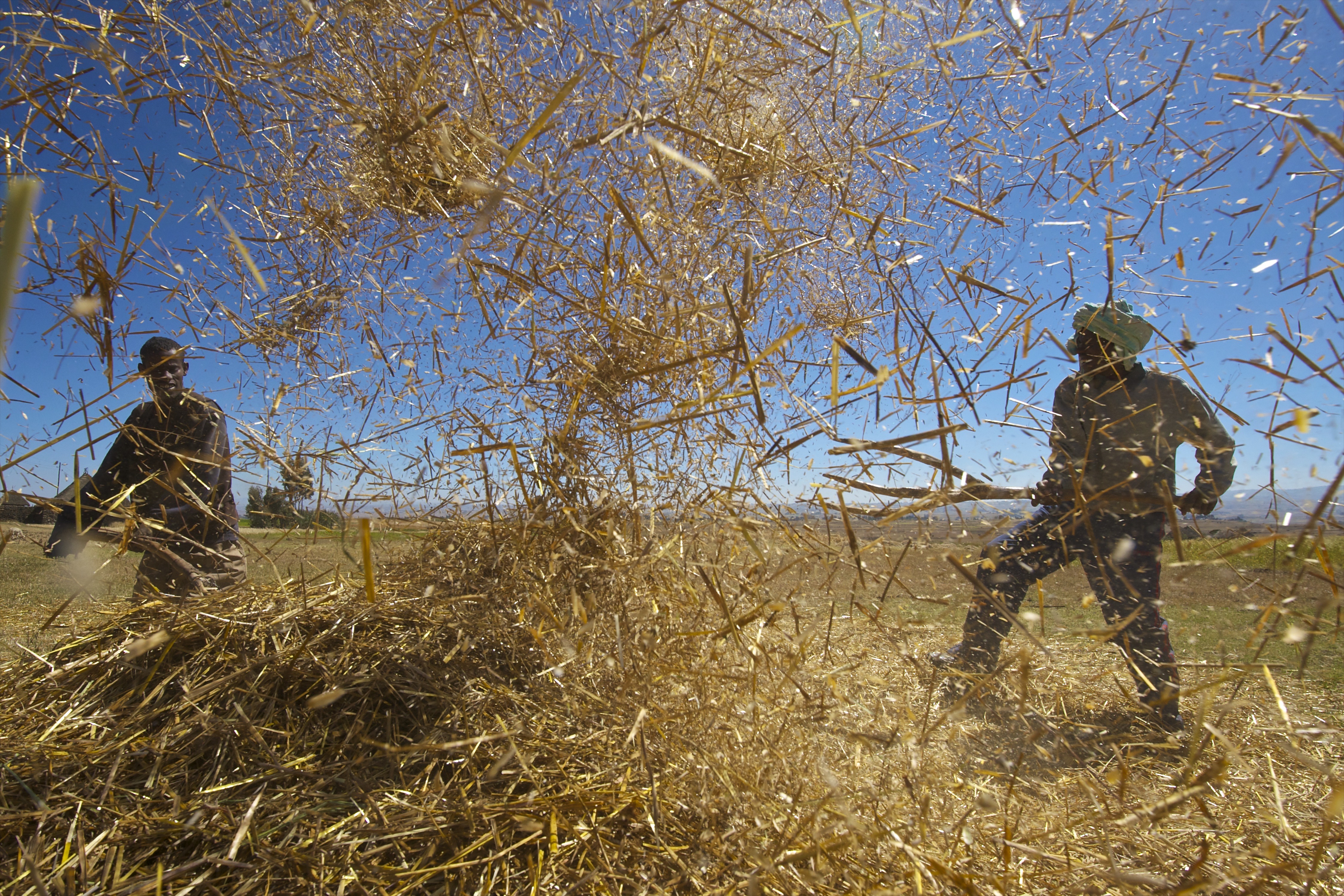
Africa will play a major role in the future of the global food system. Continued research partnerships between U.S. and African institutions can help accelerate sustainable agricultural productivity growth across the continent and around the world— strengthening global food security and driving economic growth.
Investments in international agricultural R&D provide significant returns and lead to improvements in overall human health, dietary quality and diversification, and environmental impacts, particularly in the most vulnerable populations across Africa, Asia, and Latin America. Innovation Labs are a critical channel for U.S. investments in international agricultural R&D. They are U.S. university-led global research hubs that couple U.S. research teams with international research partners to tackle specific problems that could affect the global food supply. In their various forms, they have been a key element of U.S. international agricultural engagement for decades.
As the State Department explores launching new Innovation Labs after halting them a year ago with the dismantling of USAID, it must not neglect Africa.
Investing in R&D in countries across key agricultural zones in Sub-Saharan Africa should be one of the priority considerations for Innovation Labs.
There are strategic advantages of investing in Africa, and significant negatives now and into the future if we exclude the region.
Read the full article below.
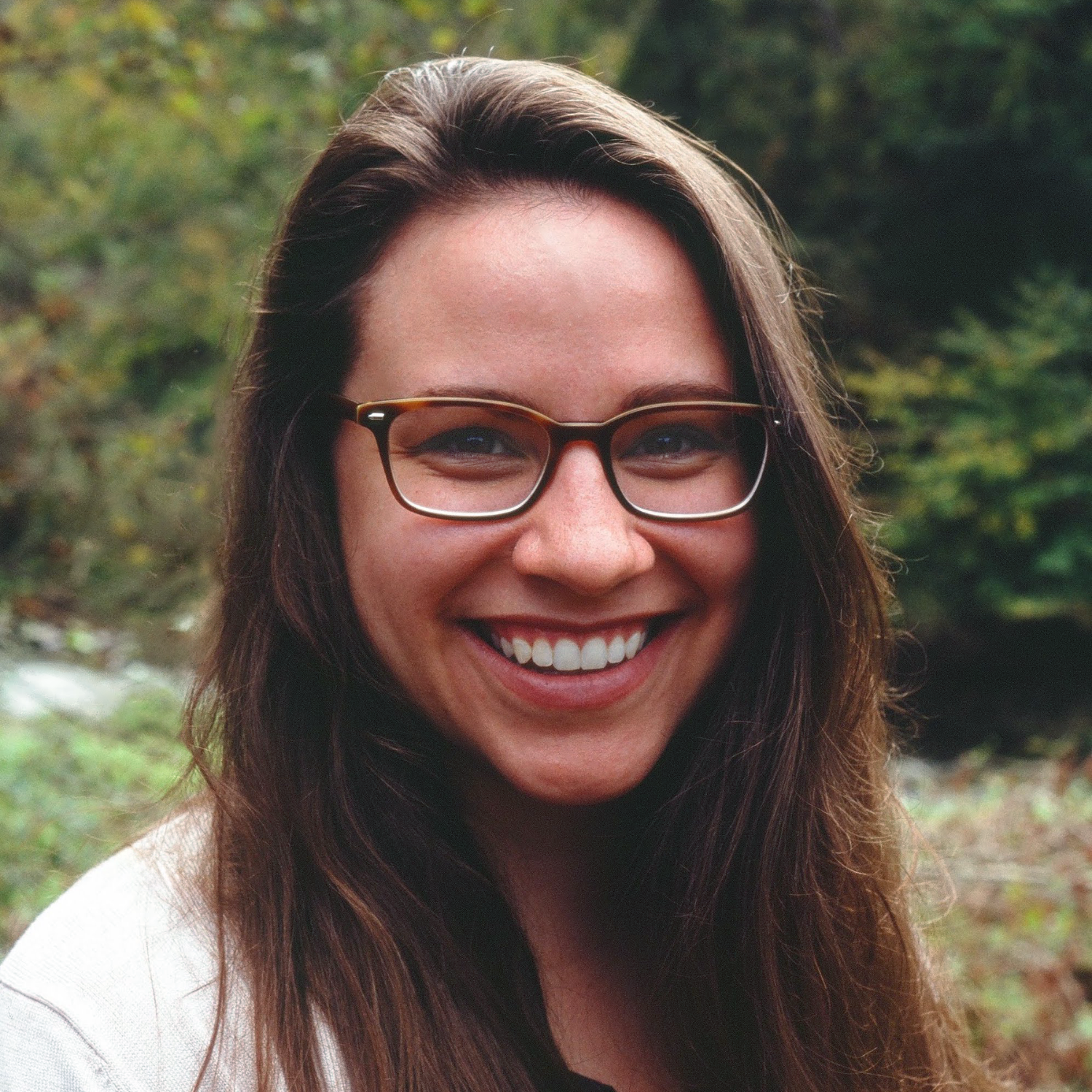
Dr. Chelsea Marcho is the Senior Director for Research and Policy at the Food Security Leadership Council. She was a Senior Agriculture Research Advisor and the Deputy Lead of the Research Operations and Implementation at USAID in the Bureau for Resilience, Environment, and Food Security. During her tenure at USAID, she played a pivotal role in shaping the Bureau’s research portfolio and was integral in coordinating the Research Community of Practice, engaging with the Interagency Working Group for Research, and drafting the 2022-2026 Global Food Security Research Strategy. Marcho also supported the work of the Scientific Citizenship Initiative at Harvard Medical school as Program Coordinator and Research Advisor. She was a AAAS Science and Technology Policy Fellow at USAID. She earned a PhD in Molecular and Cellular Biology from the University of Massachusetts Amherst and a BA in Biology from the University of Pittsburgh Bradford.

1763 Columbia Rd NW
Suite 175
Washington, DC 20009-2891